The
culture of Seychelles is a rich tapestry woven from diverse influences, reflecting the
archipelago's complex history and multicultural population. This unique cultural blend is
evident in various aspects such as traditional clothing and attire, language and literature,
music and dance, ceremonies and festivals, food, arts and crafts, and the economy.
 Traditional Clothing and Attire:
Traditional clothing in Seychelles is a vibrant mix of African, European, and Asian influences.
Women often wear brightly colored dresses made from light, airy fabrics suitable for the
tropical climate. These dresses, known as "moulton," are typically adorned with floral patterns.
Men traditionally wear casual shirts and trousers, reflecting the relaxed island lifestyle. For
special occasions and festivals, traditional costumes are worn, showcasing the rich cultural
heritage.
Traditional Clothing and Attire:
Traditional clothing in Seychelles is a vibrant mix of African, European, and Asian influences.
Women often wear brightly colored dresses made from light, airy fabrics suitable for the
tropical climate. These dresses, known as "moulton," are typically adorned with floral patterns.
Men traditionally wear casual shirts and trousers, reflecting the relaxed island lifestyle. For
special occasions and festivals, traditional costumes are worn, showcasing the rich cultural
heritage.
 Language and Literature:
Seychelles is a multilingual nation, with Seychellois Creole, English, and French being the
official languages. Seychellois Creole, derived from French, is the most widely spoken language
and is a crucial part of the nation's identity. Literature in Seychelles has flourished, with
many writers using Creole to express the unique experiences of island life. Notable authors like
Antoine Abel have made significant contributions to Seychellois literature, highlighting themes
of nature, culture, and social issues.
Language and Literature:
Seychelles is a multilingual nation, with Seychellois Creole, English, and French being the
official languages. Seychellois Creole, derived from French, is the most widely spoken language
and is a crucial part of the nation's identity. Literature in Seychelles has flourished, with
many writers using Creole to express the unique experiences of island life. Notable authors like
Antoine Abel have made significant contributions to Seychellois literature, highlighting themes
of nature, culture, and social issues.
 Music and Dance:
Music and dance are integral to the Seychellois culture, deeply rooted in African, European, and
Asian traditions. Traditional music genres include Moutya, Sega, and Kanmtole. Moutya, with its
African origins, is characterized by rhythmic drumming and sensual dance movements. Sega, with
its lively beats, is often performed during celebrations. Kanmtole, influenced by European
quadrille, involves intricate dance steps performed to lively accordion music. These genres not
only provide entertainment but also preserve and promote the cultural heritage of the islands.
Music and Dance:
Music and dance are integral to the Seychellois culture, deeply rooted in African, European, and
Asian traditions. Traditional music genres include Moutya, Sega, and Kanmtole. Moutya, with its
African origins, is characterized by rhythmic drumming and sensual dance movements. Sega, with
its lively beats, is often performed during celebrations. Kanmtole, influenced by European
quadrille, involves intricate dance steps performed to lively accordion music. These genres not
only provide entertainment but also preserve and promote the cultural heritage of the islands.
 Ceremonies and Festivals:
Seychelles is known for its vibrant ceremonies and festivals, which reflect the diverse cultural
influences. One of the most significant events is the Creole Festival, celebrated annually in
October. This week-long festival showcases Creole culture through music, dance, food, and art.
Other notable festivals include the Seychelles Carnival, which attracts international
participants and tourists, and the Independence Day celebrations on June 29th, marked by
parades, cultural performances, and fireworks.
Ceremonies and Festivals:
Seychelles is known for its vibrant ceremonies and festivals, which reflect the diverse cultural
influences. One of the most significant events is the Creole Festival, celebrated annually in
October. This week-long festival showcases Creole culture through music, dance, food, and art.
Other notable festivals include the Seychelles Carnival, which attracts international
participants and tourists, and the Independence Day celebrations on June 29th, marked by
parades, cultural performances, and fireworks.
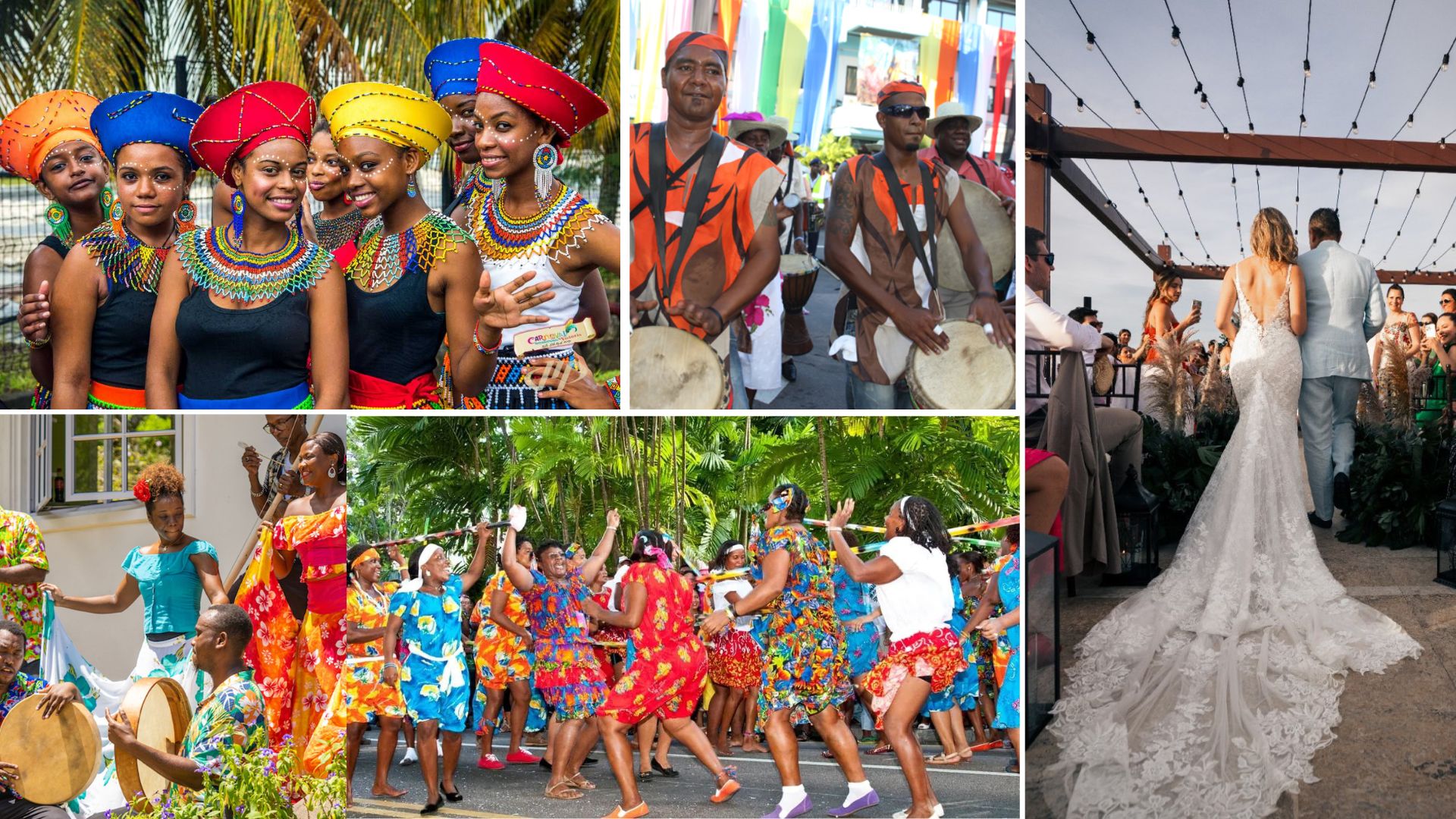
Seychelles Clothing
Seychellois clothing reflects the tropical climate and the island's laid-back lifestyle. Traditional attire is often light and airy, made from natural fabrics like cotton to ensure comfort in the heat. Women typically wear dresses or skirts with blouses, often adorned with vibrant colors and patterns inspired by the surrounding nature. Men usually wear casual shirts and shorts. For special occasions, more elaborate garments are worn, showcasing intricate designs and craftsmanship.
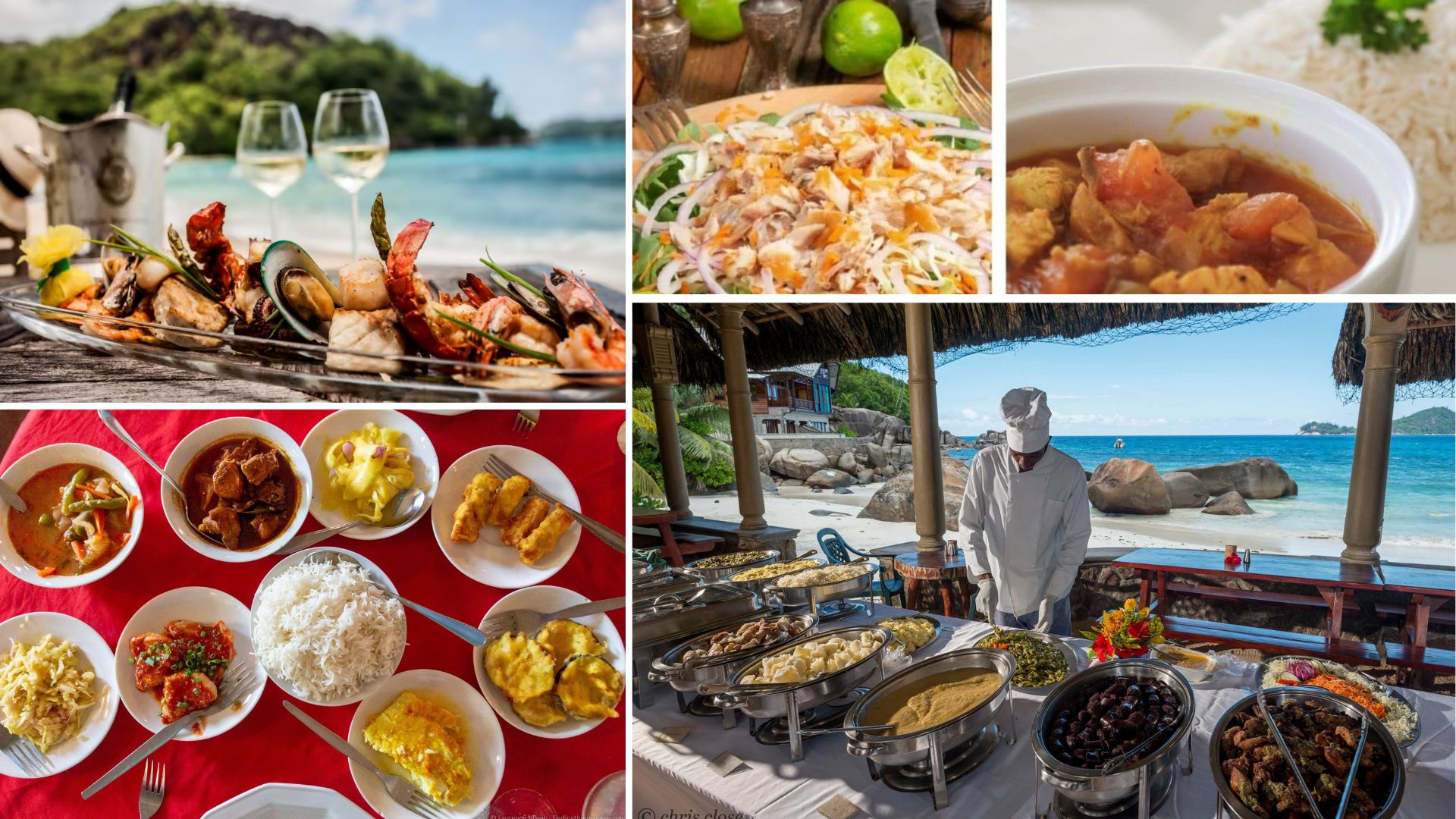
Seychelles Food
Seychellois cuisine is a delightful fusion of African, French, Indian, and Chinese flavors, making it a unique culinary experience. Seafood is a staple, with dishes like grilled fish, octopus curry, and smoked fish salad being popular. Coconut milk, breadfruit, and local spices such as curry leaves and chili are commonly used ingredients. Traditional dishes like "ladob," a sweet dessert made from bananas and sweet potatoes cooked in coconut milk, highlight the island's culinary creativity.
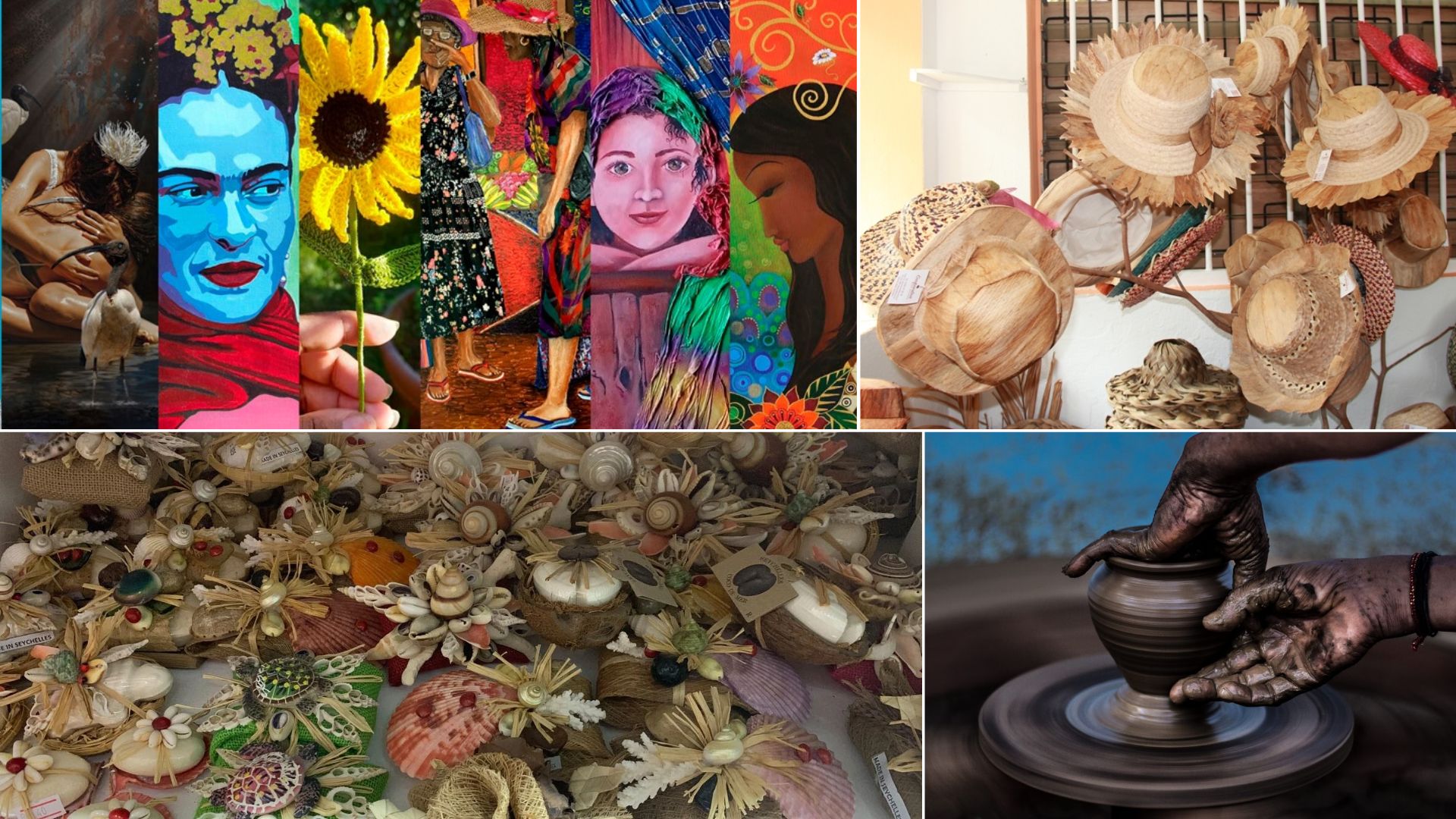
Seychelles Arts and Crafts
Arts and crafts in Seychelles reflect the islands' natural beauty and cultural diversity. Local artisans create stunning handicrafts from materials such as coconut shells, seashells, and bamboo. Popular items include woven baskets, hats, and jewelry. Traditional Seychellois art often features vibrant paintings and sculptures depicting island life, flora, and fauna. The National Arts Council of Seychelles plays a crucial role in promoting and preserving these artistic traditions.
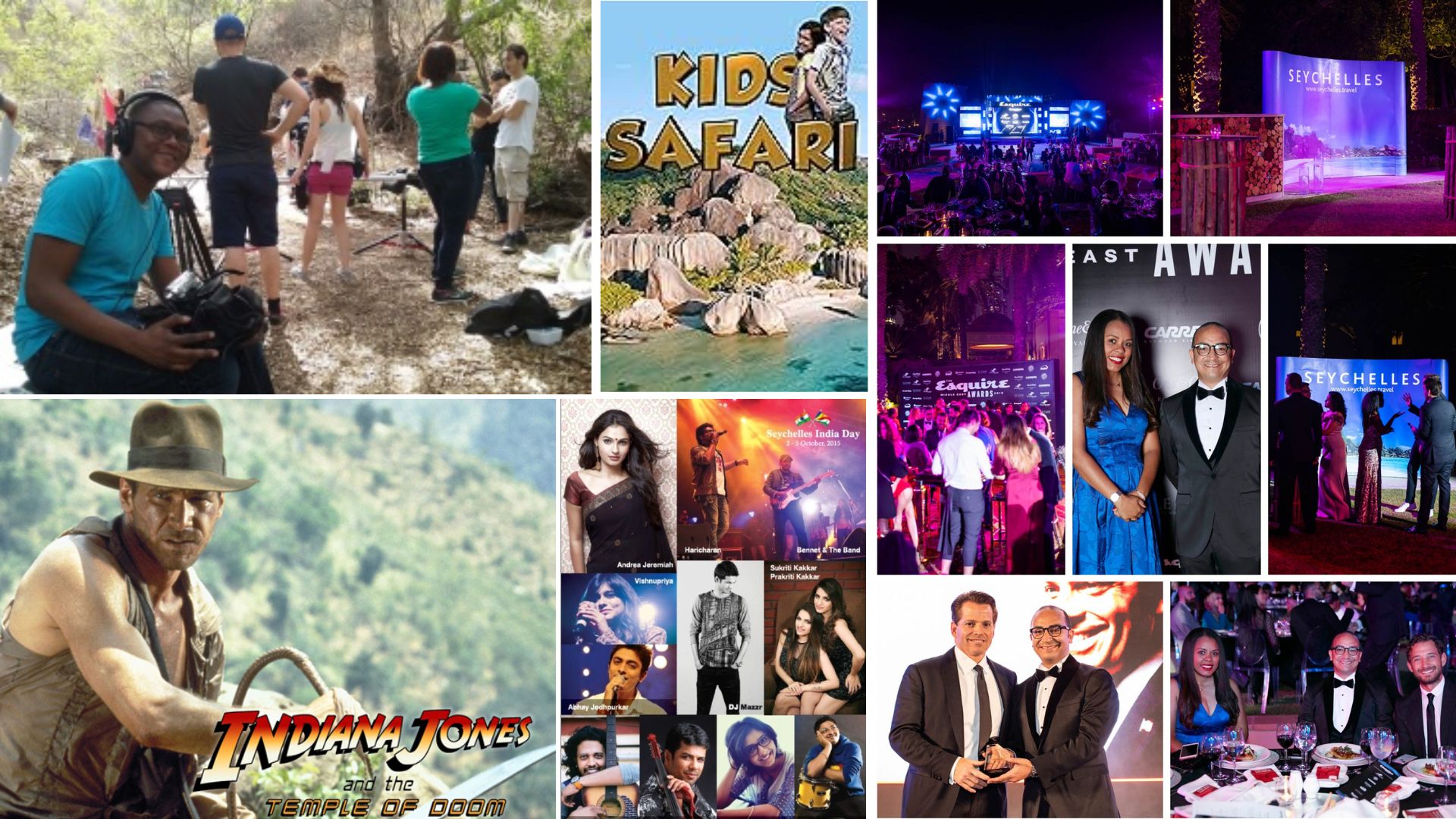
Seychelles Film Industry
The film industry in Seychelles is still in its nascent stages but shows promise with the growing interest in local storytelling. Documentaries and short films focusing on the islands' unique culture, environment, and history are gaining popularity. Local filmmakers are beginning to explore and showcase the rich heritage and contemporary issues of the Seychelles through their works, contributing to the broader global cinematic landscape.
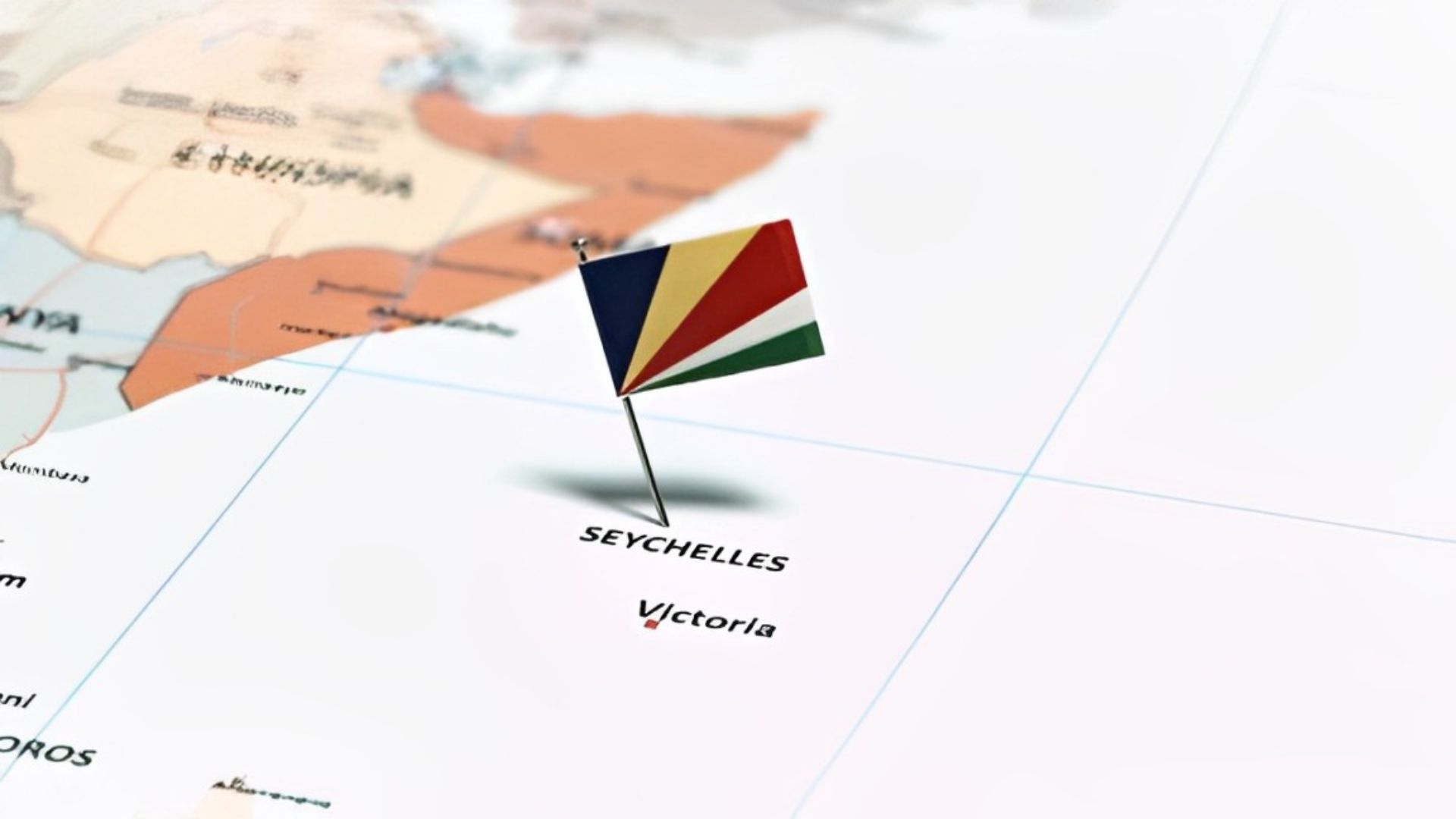
Seychelles Economy
The economy of Seychelles is diverse, with tourism being the primary industry, followed by
fishing and agriculture. The islands' stunning natural beauty and pristine beaches attract
tourists from around the world, making tourism a significant contributor to the GDP.
Fishing, particularly tuna fishing, is another vital industry, providing employment and
export revenue. Agriculture, although limited due to the small land area, includes the
cultivation of coconuts, vanilla, and cinnamon.
Textile and Garment Industry, Mining, Telecommunications
Tourism, Financial Services, Manufacturing, Agriculture, Renewable Energy.